
Can't Keep a Journal Going? Try a Routine That Fits
When journaling stalls, try reviewing the amount you write and when you start. This guide offers four things to consider, practical ideas, and the limits of relevant habit research.
Emopi Editorial Team
You bought the notebook. The first three days went beautifully. Then, somehow, the blank pages started — you might be wondering how to make journaling fit your days.
Before blaming yourself, try changing how much you write or when you start. A study of eating, drinking, and exercise habits estimated a median of 66 days to approach automaticity, with wide variation; missing one opportunity made little difference (Lally et al., 2010). This was not a journaling study, and 66 days is neither a deadline nor a promise.
Four things to review when journaling stalls
These are practical prompts for reviewing your routine, not a research-based classification of every cause.
- Perfectionism. “Writing properly” raises the cost of each entry, so consider asking less of each entry.
- The volume bar. The assumption that a journal entry means “a real piece of writing” keeps your tired self away.
- No fixed time. Without a cue, writing can be easy to forget on a busy day.
- No looking back. If writing feels inconsequential, consider whether you want time to revisit your notes.
A fix for each cause
For perfectionism and the volume bar — adopt “one line is enough,” for real
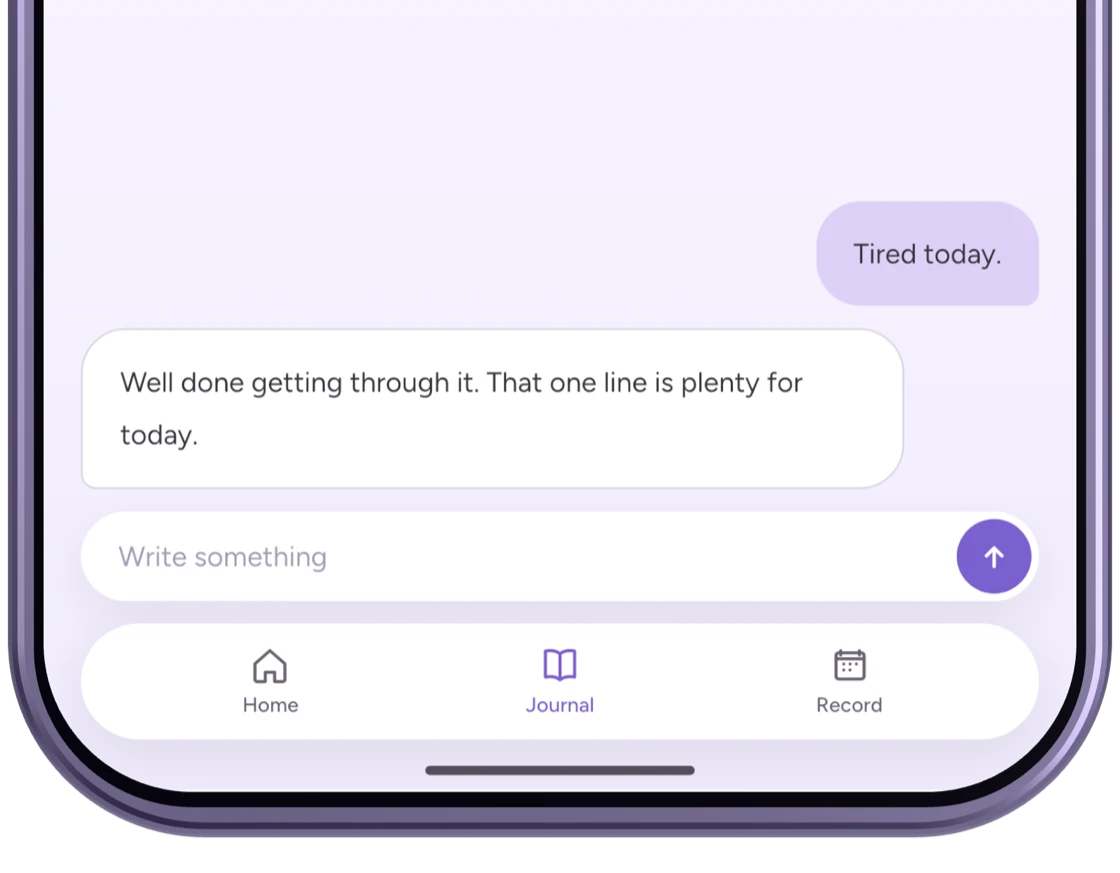
“Tired today.” That completes the day. The key is making the one-line day the standard, not the exception. When one line is standard, a three-line day is a triumph. When “writing properly” is standard, every busy day becomes a failure.
Starting with one line is our suggestion for reducing effort. A meta-analysis of 31 randomized expressive-writing trials found relatively larger psychological effects in studies spacing sessions one to three days apart (Guo, 2023). It did not test whether one-line entries outperform longer writing or make a journaling habit last.
For the timing problem — attach it to an existing habit
Rather than carving out new time, place it right after something you already do daily. Coffee poured → one line. Before bed → one line. This “when X, then Y” plan is known as an implementation intention, and a meta-analysis of 94 tests found that it helped people follow through on goals (Gollwitzer & Sheeran, 2006). This does not directly establish a journaling retention rate; we use it as a reason to try a specific cue. The bedtime version is covered in our bedtime journaling guide.
For the looking-back problem — pick a form where the record shows
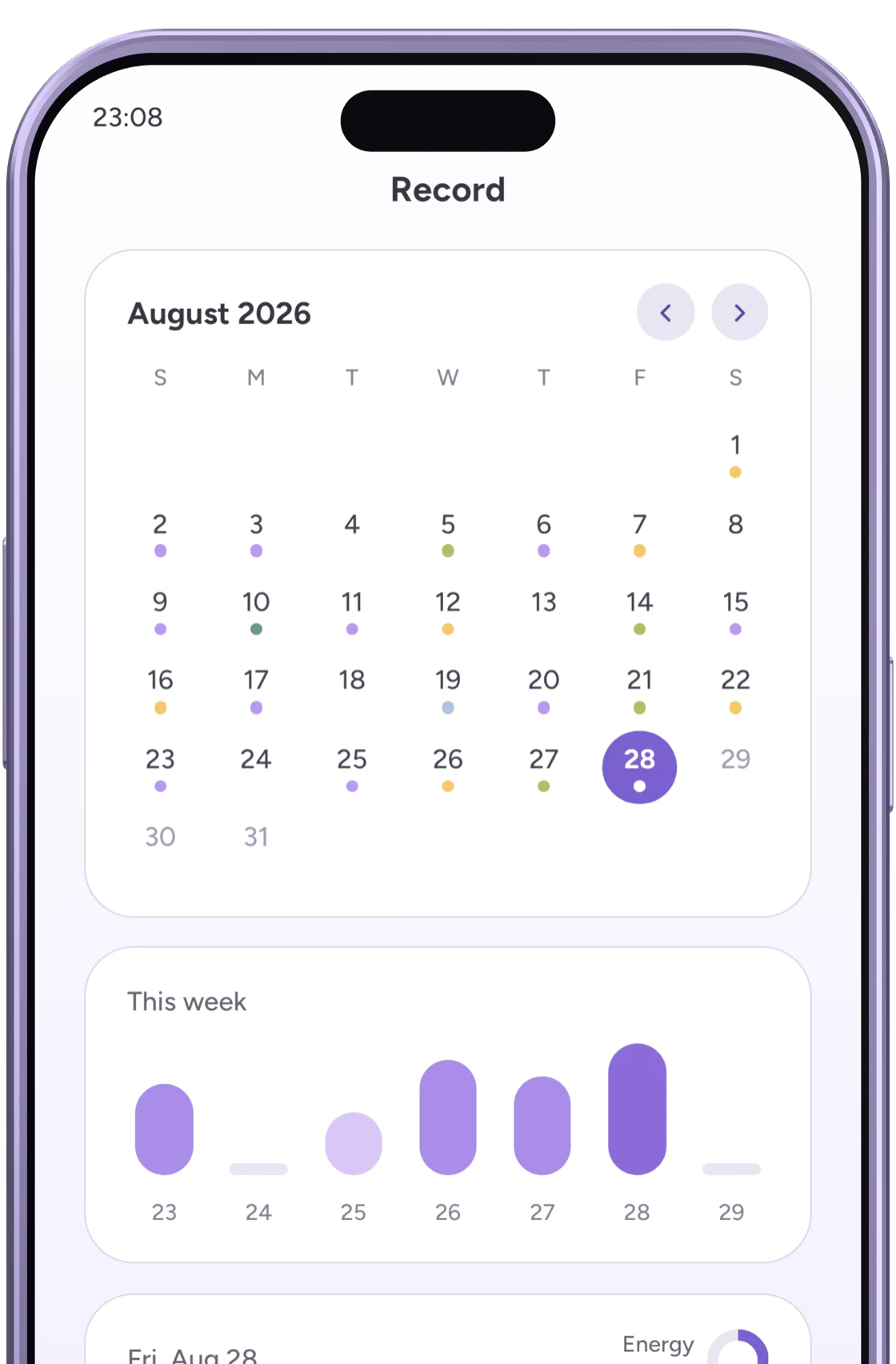
A calendar or graph gives you a way to revisit earlier entries. If looking back is part of your reason for writing, choose a format that makes that possible. On paper, schedule a monthly rereading day; in an app, choose one with a review screen worth opening.
Adjusting length, timing, and review in Emopi Diary
Emopi Diary offers short notes, optional check-in notifications, and a calendar for looking back. Try the parts that fit your day.
The standard is a one-line note
You can start with a quick note. The AI can reply and help gather it into an entry, so you do not have to organize a complete story before writing.
Figures are illustrative recreations. Displayed content and AI replies are examples; actual screens and outputs may differ.
Optional “Journal check-ins” can offer a cue
Under Notifications in Settings, Journal check-ins lets you set a daytime and an evening time and turn each on or off. You could choose a time after dinner, for example. Notification permission is required. If notifications feel like a burden, turn them off and simply open the app after an existing habit.
Looking back is built in from day one
Mood dots accumulate on the calendar; the week’s energy becomes a chart. You can choose a date to revisit its record when you want to look back.
Wrapping up
- When writing stalls, try changing the amount or the timing. Habits vary, and there is no universal deadline for keeping a journal.
- Review expectations, writing length, timing, and opportunities to look back.
- The fixes: one line as standard, anchoring to existing habits, and a visibly accumulating record.
- In Emopi Diary, try one-line notes, optional check-ins, and calendar review in a way that suits you. For the fundamentals, start with What is journaling?
Related articles


Emopi Diary
A journal you write with AI
Jot down a few words whenever something comes to mind, and AI shapes them into today’s entry — with mood, energy, and topic tags added automatically. Coming soon to iOS / Android.