
Emopi vs. Emopi Diary: Which One Should You Choose?
Emopi and Emopi Diary are sister apps born from the same idea. The official guide to how they differ, how to choose, why your account and records are shared between them, and the path from Diary to Emopi.
Emopi Editorial Team
Emopi and Emopi Diary are sister apps born from the same idea — and with names this similar, “which one do I install?” is a fair question. Here is the official answer.
The short version: journaling for yourself → Emopi Diary; sharing how you are with someone you care about → Emopi. And whichever you start with, your record is one and the same.
How the two apps differ
| Emopi Diary | Emopi | |
|---|---|---|
| In one line | A journal you write with AI | A record of feelings, shared |
| Who it is for | Solo journaling | Solo journaling and sharing with people you connect with |
| Core experience | Notes → entry → looking back | Journal → shared status → talk |
| AI journal & summaries | ○ | ○ |
| Mood & energy tracking | ○ | ○ |
| Status sharing & talk | − (solo) | ○ |
| Visual mood | A lavender-centered palette | A warm, daylight palette |
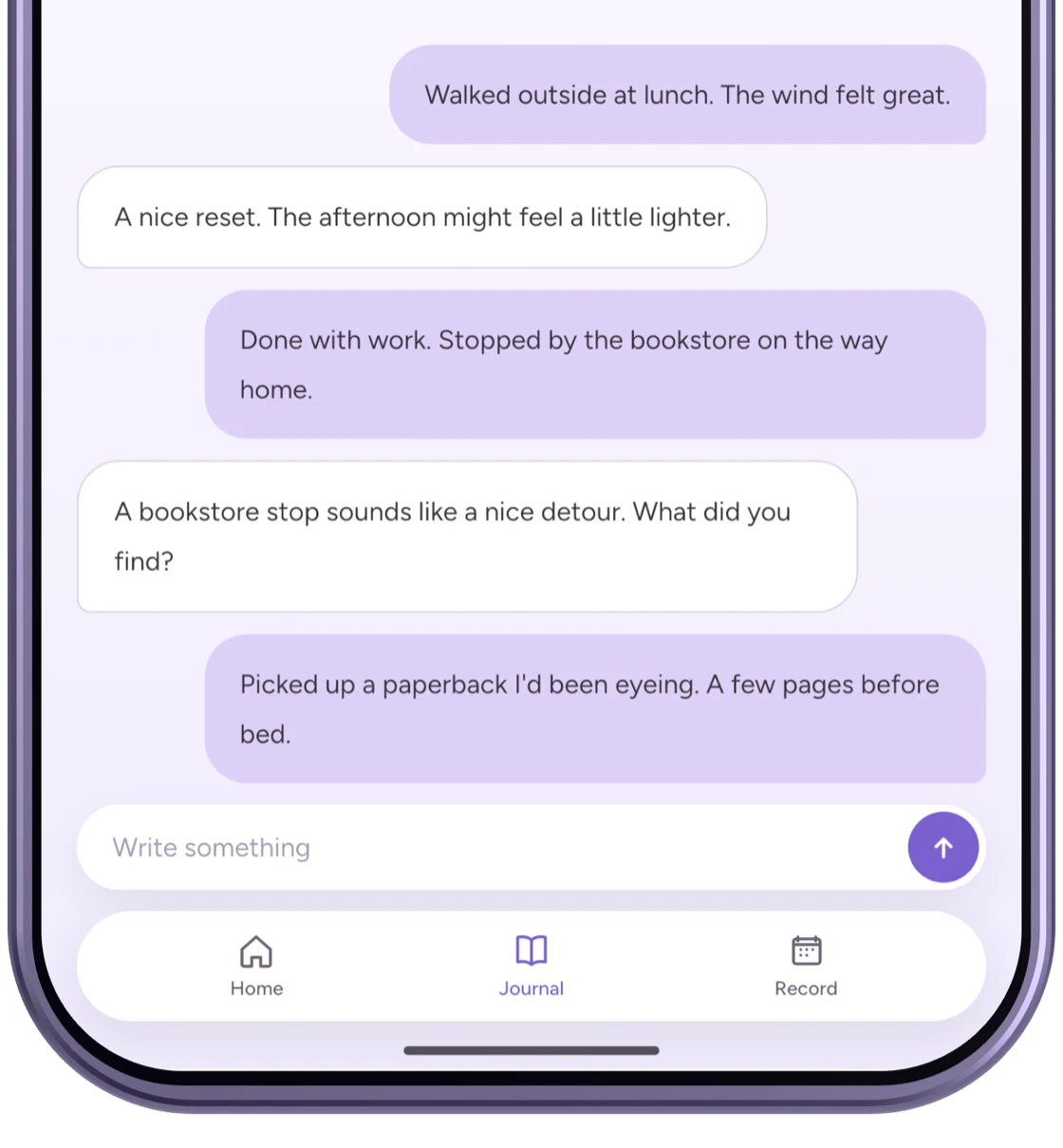
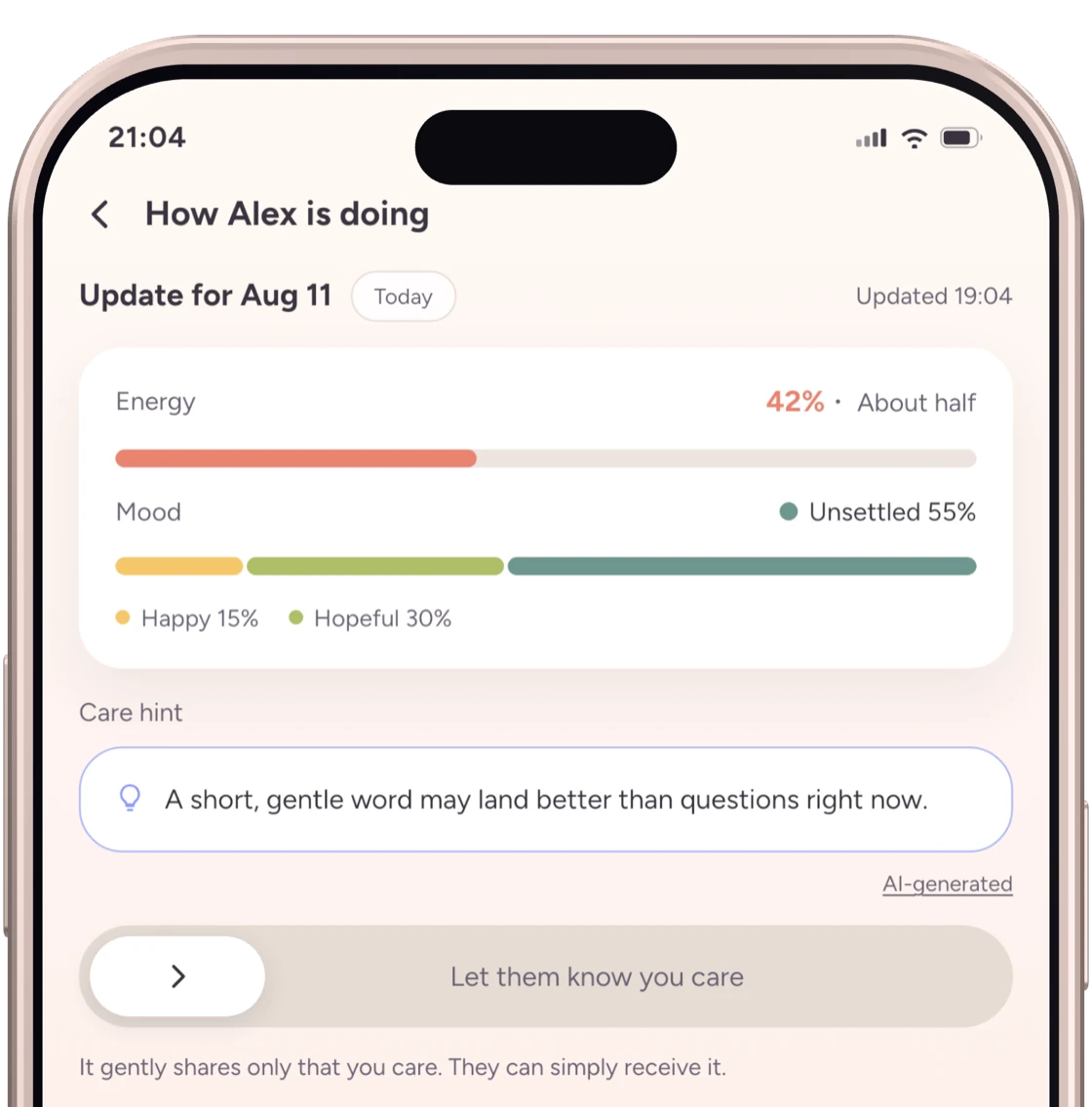
The journaling experience is nearly identical in both: jot a few words, and the AI summarizes the day and suggests mood and energy. Diary focuses on writing and looking back; Emopi adds status-sharing and Talk screens. Your journal and sharing settings belong to the same account, so opening Diary does not switch sharing off.
Figures are illustrative recreations. Displayed content and AI replies are examples; actual screens and outputs may differ.
Which to choose
- You want to start with your own feelings → Emopi Diary. A quiet, solo space built for the journaling habit.
- You want to share how you are with a partner or family member → Emopi. They will need an account too, but you can start solo and invite them later.
- Not sure? → Start with Emopi Diary. The next section explains why that path costs nothing.
One account, one record
This is the part that matters most, so plainly: Emopi and Emopi Diary share the same account, and your journal records are shared between them.
- Entries written in Diary continue seamlessly if you later start Emopi.
- You do not need to copy or import your journal when switching apps.
- So “build the habit in Diary first, move to Emopi when there is someone to share with” has zero switching cost.
Journal text is private in both apps. However, if you already have an Emopi connection, status from days written in Diary follows your current sharing settings. When making a new connection, earlier days are also eligible if “Share what you wrote before connecting” is on; this switch is on by default. Use per-day settings in Emopi for days you want to keep private. See the sharing guide for the difference between journal text and status.
Using both is fine too
Sharing with your partner in Emopi, solo journaling in Diary — that split works well. Because the record is shared, entries written in either app stack into one continuous journal. Choose by which screen suits the moment.
How pricing relates
Both apps are free to start. Each has its own paid plan — and Emopi Plus includes Emopi Diary’s plus features as well, so one subscription covers both. Details in the pricing guide.
Wrapping up
- Solo journaling → Emopi Diary; sharing how you are → Emopi. The writing experience is the same.
- One account, one record. Diary uses the same Emopi sharing settings for status; journal text is private in both apps.
- Getting-started guides: Emopi / Emopi Diary
Related articles

Emopi
Share how you feel with the people you care about
Jot down a few words, and Emopi gathers them into a journal. Connect with someone you care about to share how you’re doing. Coming soon to iOS / Android.