
Putting Feelings Into Words: How to Untangle a Vague Bad Mood
When a feeling is hard to identify, finding a word for it can be a useful starting point. This guide covers what research says about naming emotions, a three-step writing method for sorting them out, growing your feeling vocabulary, and how AI can help.
Emopi Editorial Team
“Something feels off.” “My mood is heavy.” You can spend hours inside those states — yet asked what exactly the feeling is, no answer comes. Emotional labeling gets attention precisely because so many of us carry these unnamed feelings around.
This article looks at why naming a feeling helps, then walks through a concrete method for writing feelings out. At the end, we show how Emopi Diary helps with the naming.
Naming feelings can offer a starting point
Psychologists call naming emotions affect labeling. One experiment found reduced amygdala responses when people labeled emotions in face images (Lieberman et al., 2007). A later review describes changes in emotional responses even without a deliberate goal to regulate them (Torre & Lieberman, 2018). This does not mean that naming a feeling always makes it settle.
For example, trying “frustrated” might help you find “I wanted my proposal to be heard.” A tentative word can be a starting point for considering what you want next. You can also leave the feeling unnamed.
Reporting feelings does not uniformly reduce a response. In an anger-induction experiment, participants who reported their emotions midway through the task showed a different cardiovascular response pattern from those who did not (Kassam & Mendes, 2013). This does not establish greater stress, harm to health, or the best time to journal. Our practical suggestion is to pause if writing feels burdensome.
Three steps for writing feelings out
Step 1: Separate the event from the feeling
Write them on separate lines.
- Event: my proposal didn’t get picked up in the meeting
- Feeling: disappointed — and a little embarrassed
Keeping them separate lets you look back at what happened and how you felt about it.
Step 2: Name the feeling as specifically as you can
Take “that was unpleasant” one notch further. Frustrated? Lonely? Anxious? Disappointed? The search for the word that clicks is the labeling. If one word will not settle it, use a mix — “70% frustration, 30% worry.” Feelings usually come blended.
Step 3: Sleep on it, then reread
Rereading completes the exercise. A day later, “so that’s how I felt” arrives with a step of distance built in — you may see something differently. If rereading increases distress, close the entry and choose another time, or leave it there.
Short on vocabulary? Choosing from a list counts
The usual sticking point is vocabulary. Distinguishing “sad” from “lonely” from “empty” cold is genuinely hard. The trick: pick from a list of feeling words instead of generating one from nothing. Recognizing “that’s the one” is far easier than producing it.
Fine distinctions seem to pay off, too: in daily-life tracking research, differentiating negative feelings more finely was associated with emotion regulation working more effectively (Kalokerinos et al., 2019). A word list is a practical aid, not a proven way to produce those outcomes.
How Emopi Diary helps — naming feelings together with AI
Emopi Diary builds this “naming by choosing” into the app.
The AI proposes; you adjust
Jot your notes and the AI suggests mood labels and proportions. If they feel off, choose up to three words from the wheel. Manual proportions follow selection order: 60% / 40% for two words, or 50% / 30% / 20% for three. You do not enter custom percentages. The wheel gives you words to consider; you decide which fit.
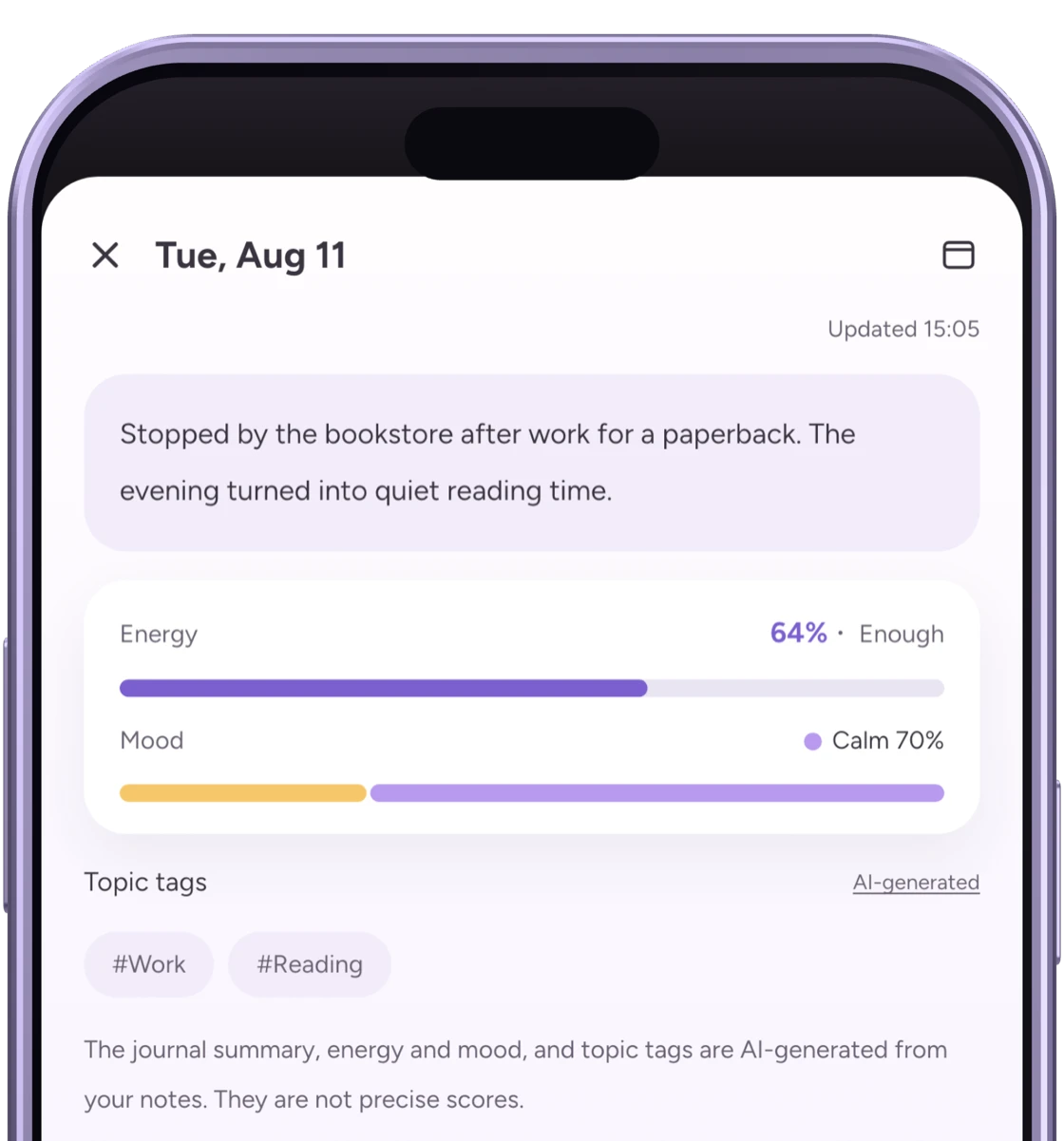
Images marked “Actual app UI” use fictional test data; other figures are illustrative recreations. Displayed content and AI replies are examples. Screens may vary by version.
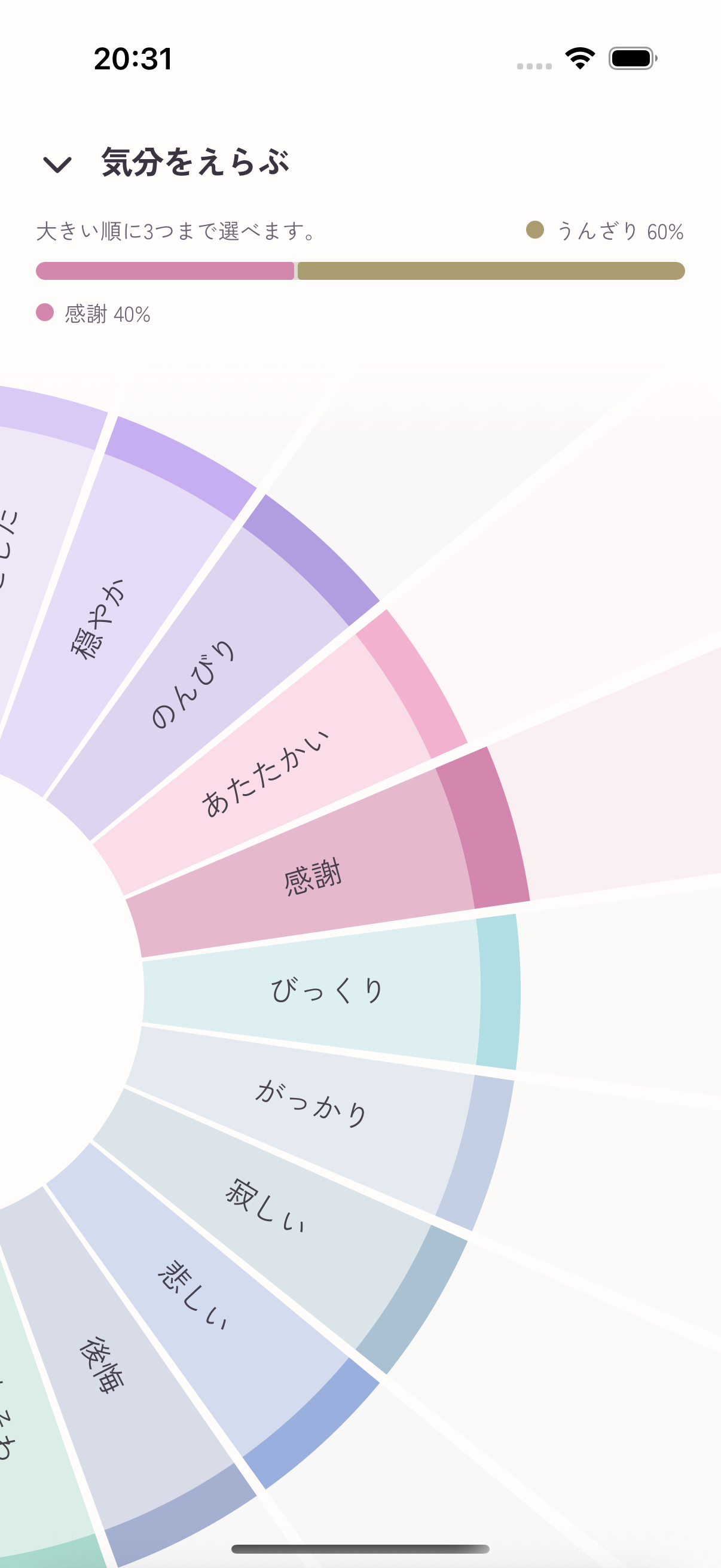
The named feeling becomes a daily record
Each day’s entry keeps the summary, the mood mix, energy, and topic tags together. Step 3’s rereading exists as a screen you already open — so labeling happens not once, but as an accumulating record.
Wrapping up
- Finding a nearby feeling word is one option when things feel unclear. Leaving the feeling unnamed is also fine.
- The method: separate event from feeling, name it specifically (blends allowed), sleep on it and reread.
- If vocabulary is the bottleneck, choosing from a list is legitimate — and easier.
- Emopi Diary pairs an AI read with a feeling-word wheel to make choosing-based labeling a daily habit. For fundamentals, see What is journaling?
Related articles

Emopi Diary
A journal you write with AI
Jot down a few words whenever something comes to mind, and AI shapes them into today’s entry — with mood, energy, and topic tags added automatically. Coming soon to iOS / Android.