
Gratitude Journaling: The Benefits, and a One-a-Day Way to Start
Writing down what went well gives your journal a specific topic. What the studies suggest, how to write entries that hold up, and how to keep the habit from turning into an obligation.
Emopi Editorial Team
A gratitude journal is a running record of the day’s “good things” — what went well, what you were thankful for. Its specific topic gives you something to try when you are unsure what to write. Gratitude-writing tasks have also been studied in psychology.
This article checks what the research suggests, then covers a sustainable way to write, and how to keep the habit from souring into an obligation.
What you can expect
Experiments compared gratitude writing with hassles and other comparison tasks, using weekly or daily records. Gratitude groups improved on some well-being measures, but not all (Emmons & McCullough, 2003). Our one-item routine below is a practical suggestion, not a replication of those protocols.
A meta-analysis of gratitude interventions found a small average benefit on well-being measures compared with measurement-only controls, but no clear advantage over other psychologically active activities (Davis et al., 2016). This does not establish that gratitude journaling works better than other approaches or changes everyone’s mood.
Here, recording one good thing is our suggestion for choosing a writing topic. If nothing comes to mind, write about something else or skip the entry.
How to write — one a day, concretely
The basic form
Before bed, write one good thing from today. That is the whole practice.
- One is enough. The famous “three good things” format is lovely — and three is a real bar on an exhausted night. Make one the standard and let bonus items be a good day’s surplus.
- Small beats big. “Lunch coffee was great.” “Got a seat on the train.” Smallness is not a flaw; noticing small things is the skill being trained.
- Be concrete. Not “grateful for my family” but “came home worn out, and dinner was already warmed.” Concreteness is what brings the feeling back on rereading.
Questions for days with spare energy
When you have a little more in you, dig one sentence deeper:
- Whose doing was it?
- If it happened again tomorrow, what would have made it possible?
On days you write the “whose,” you may find yourself wanting to tell them. A gratitude journal doubles, now and then, as a gentle doorway back into your relationships.
Keeping it from becoming an obligation
- Missed nights are fine. Demand “every night without fail” and each miss becomes a failure. Staying able to write beats a perfect streak.
- Skip the forced positivity. On a genuinely hard day, there is no need to squeeze out a good thing. “Today was rough” is the more honest entry — a gratitude journal is for catching what you overlooked, never for putting a lid on how you feel.
Gratitude journaling in Emopi Diary — as a note-taking pattern
You can use the ordinary journal input in Emopi Diary to record one good thing. This is a way to use the app, rather than a dedicated gratitude feature.
Start from one evening note
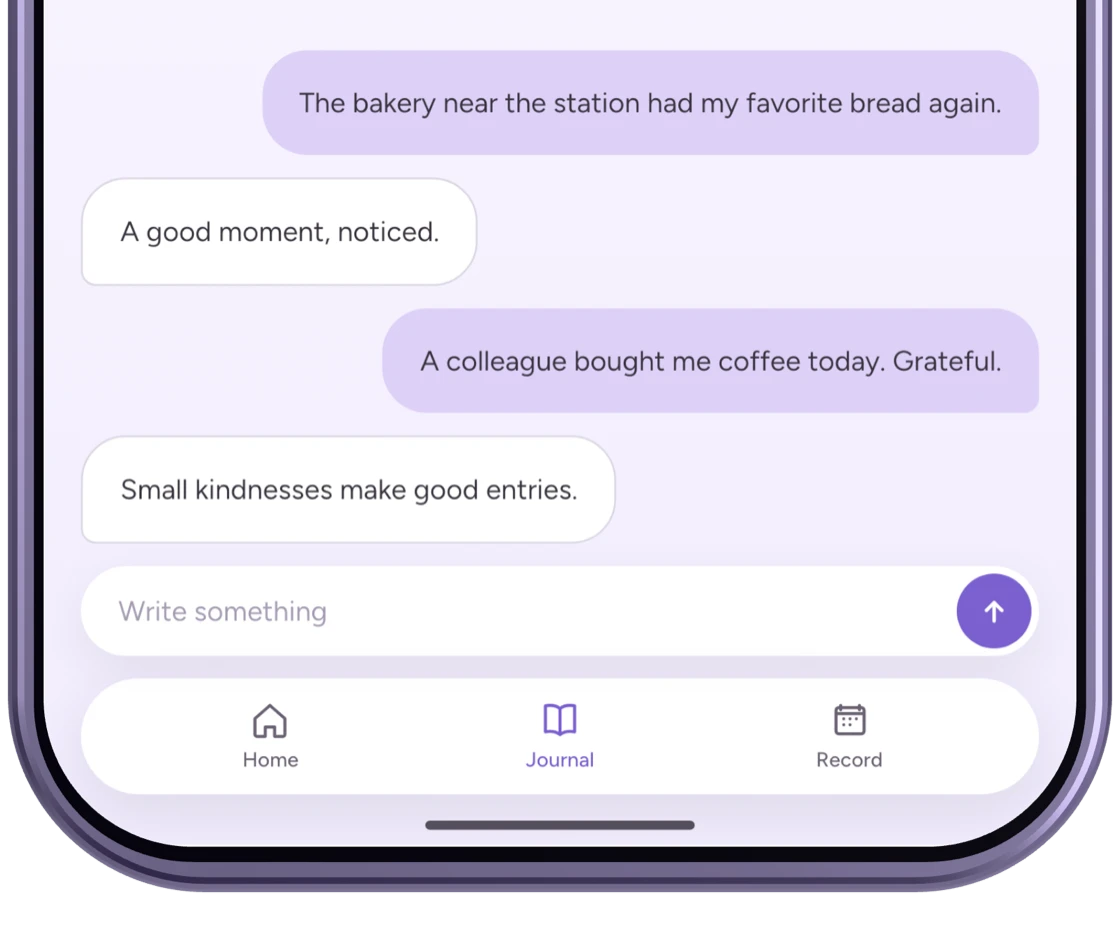
“The bakery near the station had my favorite bread again.” “A colleague bought me coffee.” Leave a brief note about a good moment or something you appreciate. You can add more after the AI replies, or stop at one.
Images marked “Actual app UI” use fictional test data; other figures are illustrative recreations. Displayed content and AI replies are examples. Screens may vary by version.
Keep a private reminder of someone’s kindness
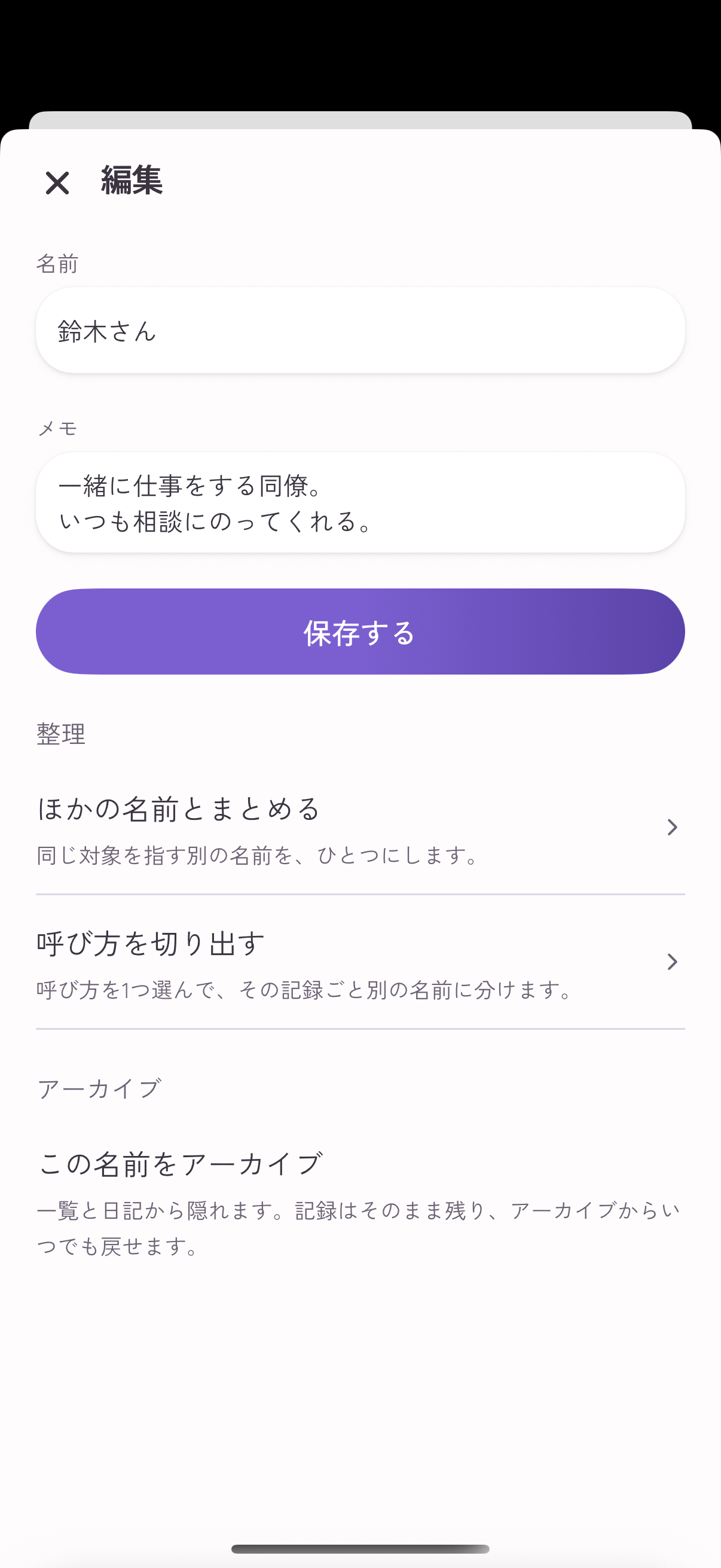
When you note who helped, you can also add a private memo to their name in your journal. Open the person from the names index, then edit their memo. A line such as “Always makes time to listen” can remind you of the help you received.
This memo stays private; it is not sent to the person. If you want them to know you appreciate it, tell them separately in your own words.
Wrapping up
- A gratitude journal records good things or things you appreciate. Studies found benefits on some well-being measures, with results depending on the comparison activity.
- Write one a day — small and concrete. On spare-energy days, add whose doing it was.
- Keep it obligation-free and honesty-first.
- In Emopi Diary, one evening note is the whole practice. See also bedtime journaling and keeping a journal going.
Related articles


Emopi Diary
A journal you write with AI
Jot down a few words whenever something comes to mind, and AI shapes them into today’s entry — with mood, energy, and topic tags added automatically. Coming soon to iOS / Android.