
An Exchange Diary, as an App: A Modern Shape for Grown-Up Pairs
The exchange diaries of childhood offered asynchronous pace, words that stay, and a window into each other. This guide unpacks those charms, why paper made it hard to continue, and app options that carry those charms in a different shape.
Emopi Editorial Team
“Exchange diary” is a phrase with a particular warmth to it. The slight nervousness of handing the notebook over; the small joy of opening a returned page. In an era when messaging delivers everything instantly, there are real reasons that format still tugs at us.
This article breaks the charm of the exchange diary into parts, looks at why paper made it hard to keep going, and shows how an app can carry those charms in a different shape.
The charm, in three parts
- It is asynchronous. With no expectation of an instant reply, you can think before you write. Time flows differently than in a chat with read receipts and typing indicators.
- The words stay. Conversation evaporates; written words remain on the page. Months later, they have become a record of the two of you.
- It opens a window into each other. Things too awkward to say face to face can be handed over in writing. Speaking and writing surface different kinds of honesty.
Research resonates with the format, too: in a 42-day diary study of 96 married couples, daily disclosure and perceived partner responsiveness were associated with intimacy reported on the same day (Laurenceau et al., 2005). The diaries were research records, not an exchange-diary intervention. We use this finding as context for considering both disclosure and response.
Messaging apps can also support delayed replies and rereading. For an exchange-diary feel, agree that instant replies are optional and check whether you can easily find a particular day’s record.
Why the paper version was hard to keep going
- It required handing over. Easy to miss even under one roof; impossible across distance.
- One notebook, shared. While they have it, you cannot write. And “your turn” carries quiet pressure.
- Blank pages get awkward. Skip a few days and the restarting entry feels heavy. An empty page speaks louder than it should.
Handovers and turn-taking can add effort alongside writing itself. When choosing an app, check which of those practical constraints it removes.
When Emopi fits: private journaling with shared status
If you want to read each other’s journal prose, a shared notes or exchange diary app fits that purpose. Emopi does not provide a shared notebook for writing journal entries to each other.
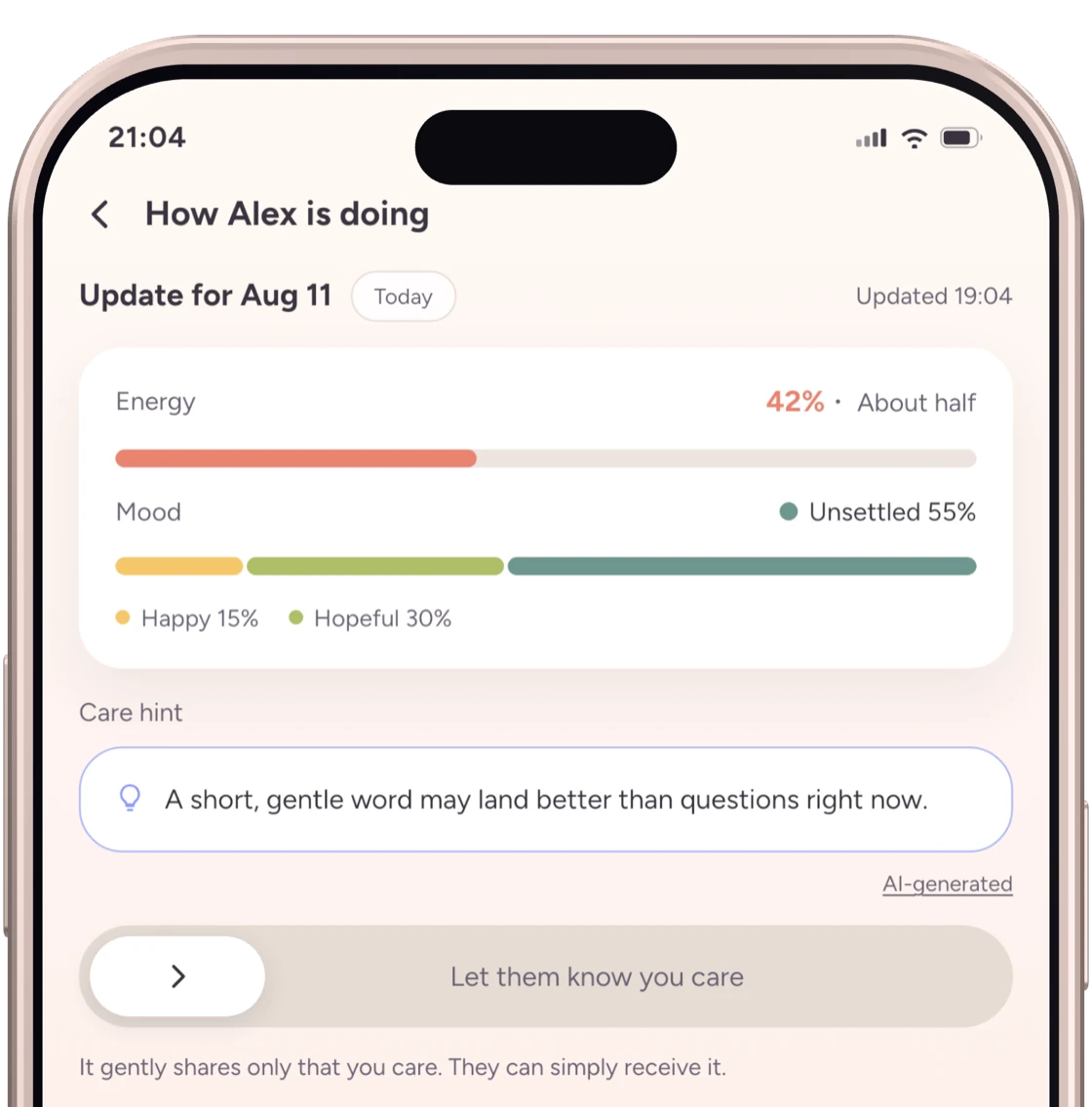
Emopi is an option when you want your journal to stay private while sharing mood and energy. Journal text and AI summaries do not reach your partner. Sharing requires an active connection and enabled settings; the app does not automatically know how you feel on days without a record.
Share how you are doing, while keeping the journal private
Each of you can jot notes for your own journal. The AI gathers them into a summary and suggests mood and energy; you choose which status items to share. This is a different experience from reading each other’s prose. Start by deciding whether you want to exchange events and words or a broad sense of how you are doing.
Images marked “Actual app UI” use fictional test data; other figures are illustrative recreations. Displayed content and AI replies are examples. Screens may vary by version.
Write words for them in day-by-day Talk
Send words such as “Sounds like a long day” in Talk when you want them to reach your partner. Talk is grouped by date, and they can read it in their own time. Your journal is your private record; Talk contains the messages you choose to send. Date separators also help you revisit earlier exchanges, such as the day you talked about trying a new coffee shop.
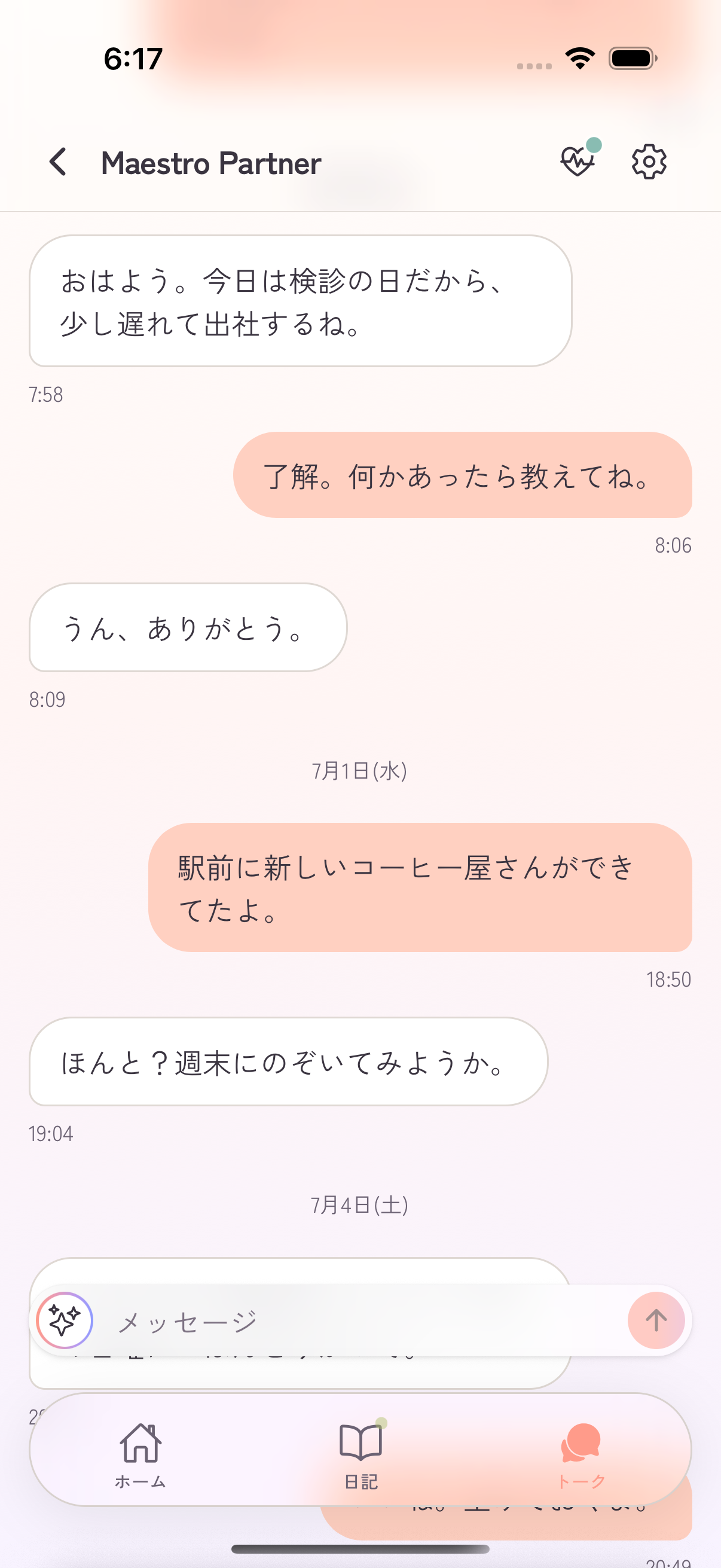
Agree on how often to write and what to expect about replies. Sharing journal entries and exchanging messages in Talk are separate choices.
Wrapping up
- The exchange diary’s charm: asynchronous pace, words that stay, a window into each other . Messaging apps can support these too, depending on how you use them.
- An app removes the physical handover. Writing effort and expectations about replies still need a conversation between you.
- Choose by purpose: a shared notebook for reading each other’s entries, or Emopi for private journaling with shared status. For how to choose, see our journal apps guide.
Related articles


Emopi
Share how you feel with the people you care about
Jot down a few words, and Emopi gathers them into a journal. Connect with someone you care about to share how you’re doing. Coming soon to iOS / Android.